FROM FOUNDATION TO FINESSE – Hands on Workshop with Fred Helfers
Sunday February 28th, 2016
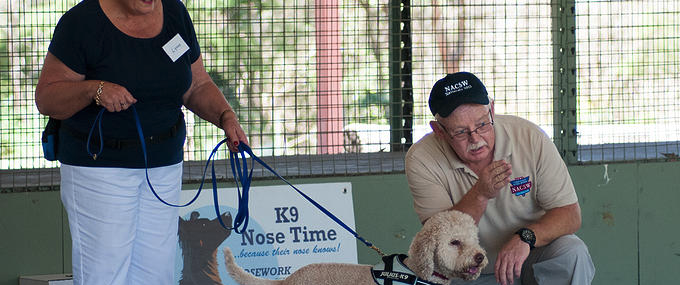
In this workshop, Fred will work hands on with teams to improve training, team work and competition. The workshop covers handler skills, reading your dog, and training drills that define patterned searches and handler/dog communication with minimal intrusion on the dog working to an odor source. Fred brings over 20 years of professional K9 detection experience to the table. He is also a frequent judge at NACSW trials.
Fred uses a unique workshop format, where he splits the working teams into two groups, with the teams taking turns working dogs vs observing. This allows all handlers to benefit from hands-on work with their dogs, but also from watching other teams. Multiple-dog handlers may alternate working their 2 dogs. Video review will be conducted for both teams and for both morning and afternoon sessions.
| DATE / LOCATION | Sunday February 28th, 2016 (8:00am to 5:00pm) @ Waialua High School – 67-160 Farrington Hwy |
| REGISTRATION PRICE | |
| WORKING SPOT: | $150 per dog/handler team $135 per dog for 2 dog handlers ($270 for both dogs) |
| OBSERVER SPOT: | $75 per person (attending without a dog) |
Requirements for Working Participants (limited to 10 dogs per day): Dogs must be on birch odor (may be pairing) and must have taken or be currently enrolled in a Continuing class (or equivalent).
Requirements for Observer Participants: There are no pre-requisites for observers attending without their dogs. One of the best ways to learn about nose work is to watch other dogs work, without the pressure of handling your own dog. At this seminar, there will dogs of various sizes, breeds and personality types. You will learn the ins and outs of the sport by observing the various dogs as they progress though the seminar day.
ABOUT FRED HELFERS
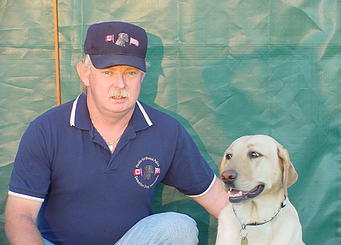
Fred Helfers began working detection dogs in the early ’80s in Washington State, working with a municipal Police department. For over 22 years Fred worked in undercover narcotics and it was during his early years in the department that Fred wrote a proposal for the first drug detection dog for that agency. The proposal was accepted and Fred entered the world of detection dogs. Completing training in 1982 with his first dog Sammy (a Black Labrador Retriever), Fred and Sammy were the only drug detection unit between Seattle and the Canadian Border, and, as such, were very busy. Working as a detective in the drug unit, Fred worked and trained regularly with the local US Customs dog team. For the next 8 years Fred and Sammy worked between Seattle and the Canadian border, detecting over a million dollars in US currency (drug proceeds) and multiple large quantities of cocaine, heroin, methamphetamine and cannabis.
As Fred’s reputation and expertise became recognised, he was approached by many police agencies to train detection dogs and handlers. So, in 1984, Fred opened a police detection dog training facility on 8 acres north of Seattle WA. His reputation for training drug detection dogs and their handlers had then spread to other states in the Pacific Northwest of the US.
While still working as a police detective, Fred would train detection dogs in the morning then go to work as a police detective. He became President of the Washington State Police Canine Association and for over two terms was able to influence, administer and oversee certifications for drug detection dogs in WA State.
Fred’s passion for detection dogs was widely known by this time and eventually he began training accelerant detection dogs for fire departments in Washington State. During Maggie’s first field application, Maggie and her handler, Larry Micheau were dispatched to a triple homicide fire scene. Fred also went along for the dog application, to assist the fire marshal, Larry Micheau. Maggie detected minute traces of accelerants that proved crucial in the conviction of a woman on three counts of aggravated homicide. Fred testified for over five hours, educating the court and jurors on how detection dogs were trained and detected odours. Fred was easily qualified and received court recognition as an expert in detection canines.
Fred’s experience also includes newer forms of detection including:
* Oregon State Department of Agriculture’s pilot program on insect detection (Gypsy moth egg mass and Japanese beetle larvae)
* Natural gas leak detection for a large utility company for their pipeline network